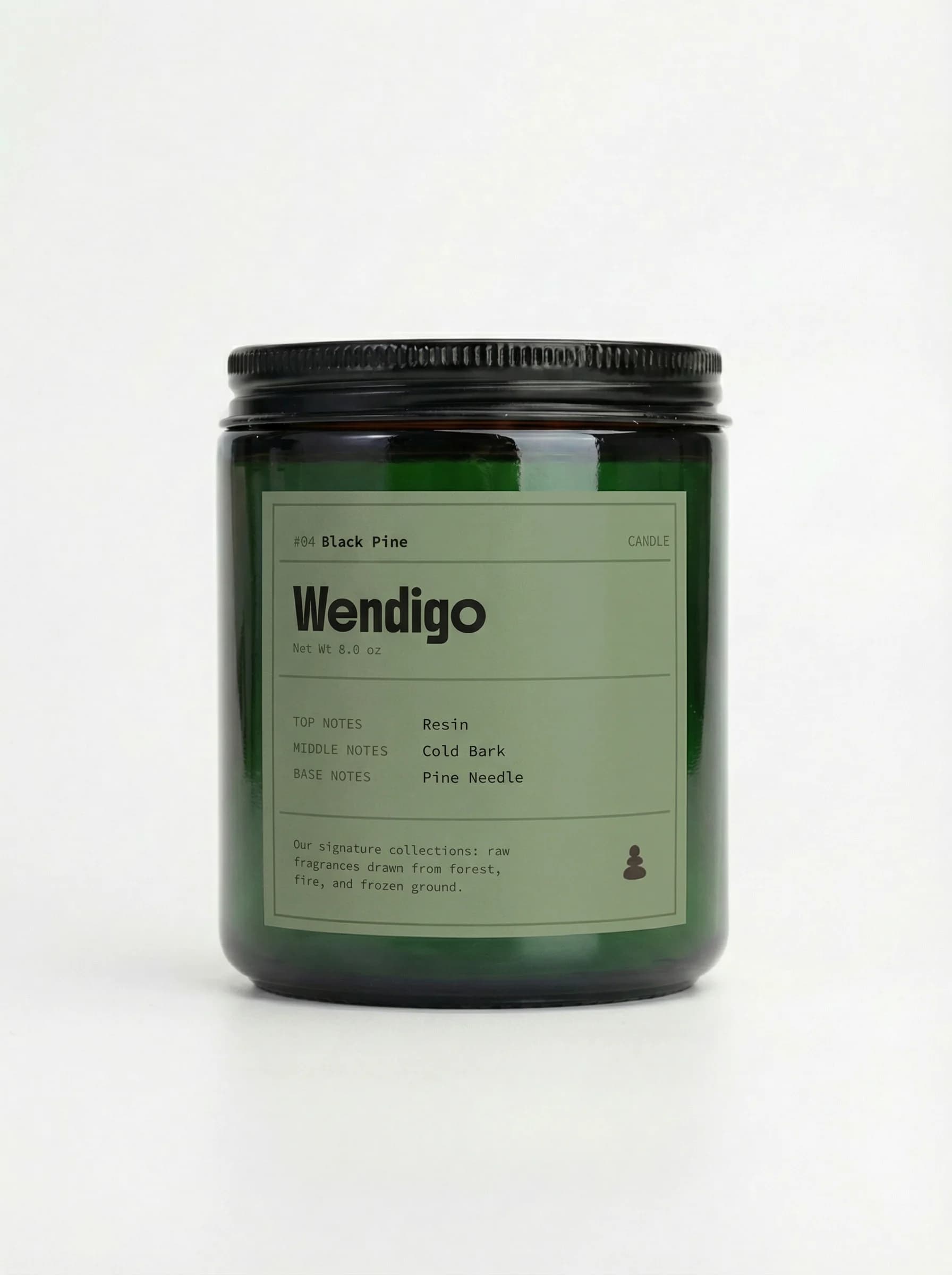
The incense category is dominated globally by Japanese, Indian, and Tibetan formats, each with distinct manufacturing methods and burn characteristics. This is a technical breakdown of the major incense formats, how they differ, and where Wendigo's incense fits.
Format 1: Extruded (Japanese tradition)
Japanese incense is generally extruded. Fragrance materials (powdered sandalwood, agarwood, herbs) are mixed into a paste with tabu powder binder (made from the bark of the Machilus thunbergii tree), extruded into thin sticks, and dried. The stick itself is the fragrance — there's no separate combustible core.
Typical specs:
Length: 4–6"
Burn time: 20–30 minutes
Smoke profile: low
Scent precision: very high (clean burn, no carrier interference)
Manufacturing: highly traditional, often centuries-old houses
What this format does well: clean burn with low ambient smoke. Highly controlled scent profile. Suitable for ceremonial use and for daily burn in small living spaces.
What this format does less well: burn time is short. Compositions are constrained to materials compatible with the paste-and-extrude process — modern fragrance oils don't typically work in this format.
Format 2: Bamboo-core dipped (Indian / North American tradition)
The dominant format outside Japan. A thin bamboo stick (the core) is coated with a paste of charcoal powder, binder, and fragrance oil. The bamboo is combustible, which adds a faint smoky base note and produces more visible smoke than extruded incense.
Typical specs:
Length: 6–10"
Burn time: 30–60 minutes
Smoke profile: medium
Scent precision: moderate (the bamboo core contributes a base smokiness that interacts with the fragrance)
Manufacturing: more flexible, accepts a wider range of fragrance materials
What this format does well: longer burn per stick. Accepts modern fragrance oils. Production scales more easily than extruded incense.
What this format does less well: higher smoke volume. The bamboo base note is always present and constrains the cleanliness of the scent profile.
Format 3: Tibetan rolled
Less common in the Western market. Fragrance materials are mixed into a paste similar to Japanese incense but rolled into thicker sticks without a core. Typically uses Himalayan herbs and woods.
Typical specs:
Length: 4–8"
Burn time: 30–45 minutes
Smoke profile: medium-high
Scent profile: distinctive, herbal-heavy
Manufacturing: small-scale, often monastic
Format 4: Cone
Compressed cone of fragrance paste, no stick. Burns from the top down.
Typical specs:
Burn time: 15–25 minutes per cone
Smoke profile: medium
Often produces visible "cascading smoke" effects (the basis for backflow incense)
Where Wendigo's incense fits
Wendigo incense is bamboo-core dipped. 8-inch sticks, 40–45 minute burn time, medium smoke profile, made by a small incense maker in Oregon using our fragrance compositions.
Why we chose bamboo-core:
Format compatibility. Extruded incense requires fragrance materials that survive the binding and drying process — primarily powdered woods, resins, and dry herbs. Our fragrance compositions are oil-based and designed for candle use. Bamboo-core dipping accommodates oil-based fragrance directly.
Burn duration. A 40-minute burn matches typical use — long enough to scent a room, short enough to use as a discrete event rather than as background ambient.
Domestic manufacture. We work with a small incense maker in Oregon. The traditional Japanese houses do not contract-manufacture for outside brands. Extruded incense would have required either building extrusion capacity or sourcing from a non-traditional manufacturer.
What we sacrifice with this format:
Smoke volume is higher than extruded Japanese incense.
The bamboo base contributes a slight smokiness that's always present in the burn. This is acceptable for our fragrance compositions (most of which have smoke or wood elements anyway) but would be a problem for cleaner floral or citrus compositions.
The format isn't ceremonial-grade. We don't compete with traditional Japanese incense in that use case.
Burn rate comparison across formats
Format | Length | Burn time | Smoke | Coverage
Extruded Japanese (daily) | 5.5" | 25 min | low | 150 sq ft
Extruded Japanese (premium agarwood) | 4.7" | 20 min | low-medium | 100 sq ft
Bamboo-core (typical) | 9" | 35 min | medium | 200 sq ft
Wendigo (Black Pine) | 8" | 42 min | medium | 200 sq ft
Tibetan rolled | 6" | 35 min | medium-high | 250 sq ft
Cone | n/a | 20 min | medium | 100 sq ft
Which format to choose
For low-smoke, precise traditional scent in a small space: extruded Japanese.
For premium ceremonial or meditation use: premium agarwood-based Japanese.
For Western fragrance compositions in incense format with longer burn: bamboo-core (Wendigo or similar).
For distinctive herbal compositions and atmospheric burn: Tibetan rolled.
For short, discrete burns: cones.
The categories don't directly compete — they answer different questions. Wendigo incense isn't trying to replace Japanese ceremonial incense. It's trying to extend Wendigo fragrance compositions into a faster-onset, more atmospheric format than the candle. That's a different use case.
What to look for in any incense purchase
Same disclosure principles as candles:
Named ingredients (or at least disclosed fragrance compliance — IFRA, phthalate-free)
Burn time with format type stated
Origin and manufacturer
Whether the core (if present) is bamboo, sandalwood, or other material
Most incense in the mass market is bamboo-core, dipped in undisclosed fragrance oils, with no compliance documentation. The premium category — Japanese houses, traceable bamboo-core, named ingredients — operates above this baseline. The price difference reflects the disclosure and the quality of the materials.
The price difference reflects the disclosure and the quality of the materials.
Wendigo & Co.