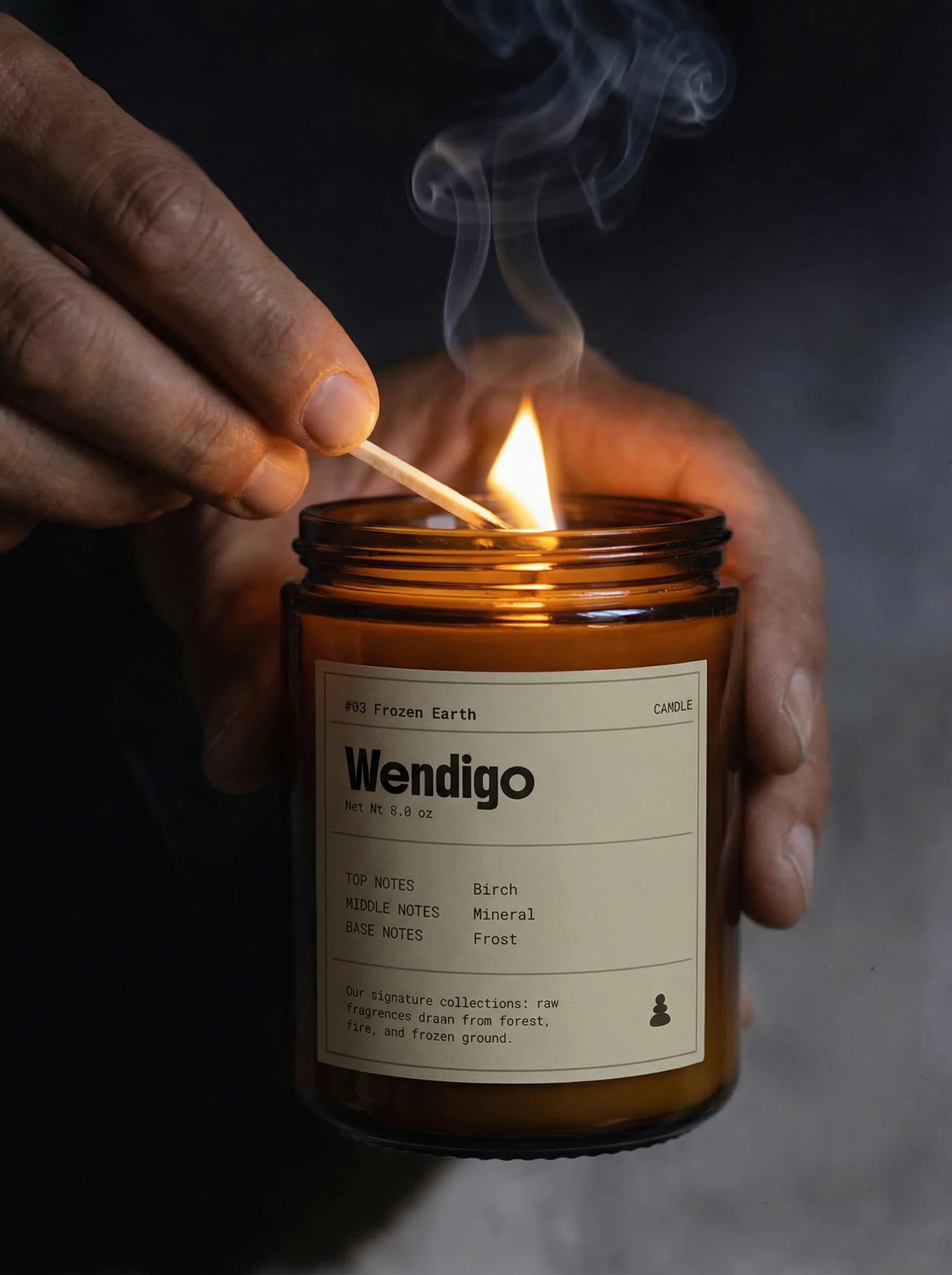
Candle labels are mostly marketing. The information that would actually help you evaluate the product is optional, and most brands choose to omit it. Once you know which words mean something and which words are decorative, the label becomes much easier to read.
This is a quick translation guide.
"Clean"
Not regulated. Means whatever the brand decides it means. There's no certifying body, no required test, no agreed-upon definition.
What it should mean (if the brand uses it carefully): phthalate-free fragrance, named wax type, disclosed wick material. If a brand uses "clean" without specifying any of those, the word is decorative.
"Natural"
Not regulated. Often means "contains some plant-derived ingredients" while saying nothing about the percentage or about the other ingredients. A candle that's 30% soy and 70% paraffin can legally be called natural.
"Non-toxic"
Not regulated unless paired with a specific certification (MADE SAFE, EU REACH compliance, or similar). Without a named standard, the term has no defined content.
"Soy wax"
Legally describes any blend containing soy. The industry norm for products marketed as soy candles is a soy-paraffin blend in the range of 60/40 to 30/70 soy to paraffin. If the brand doesn't disclose the ratio, assume the higher paraffin fraction.
"Coconut wax"
Slightly more meaningful than "soy wax" because pure coconut wax is structurally soft and almost always blended with a co-wax (rapeseed, apricot, soy). Without a disclosed ratio, you don't know what the co-wax is or what percentage it makes up.
"Essential oils" / "essential oil blend"
Means some of the fragrance is essential oil. Doesn't mean the candle is fragrance-oil-free. Most "essential oil" candles blend essentials with synthetic aroma molecules because essential oils alone rarely produce adequate throw at standard candle loads.
"Hand-poured"
Almost meaningless. Nearly every candle in the independent category is hand-poured, including most that come from large facilities. The term describes a manufacturing method, not a formulation.
"Burns 60+ hours"
Burn time without a protocol. Could be measured under continuous burn (faster melt) or under intervals (slower melt). The "+" is doing significant work — the actual number could be 50, and might be measured under conditions you'll never replicate.
"Lead-free wick"
Required by U.S. law since 2003. A brand highlighting this is presenting a baseline legal requirement as a feature.
"Phthalate-free"
Genuinely meaningful, but worth verifying. Phthalate-free + IFRA-compliant is the stronger claim. Phthalate-free alone can sometimes mean "we replaced DEP with a different undisclosed solvent."
"Crackling wood wick"
The crackle is real (it's water vapor and resin escaping the wood as it burns). The phrase is descriptive, not specifying. Doesn't tell you the wood species or whether the wick is certified.
"Made in [Country]"
Often refers to final assembly, not raw material sourcing. A candle "made in the USA" can use wax from Indonesia, wick from China, fragrance from France, and glass from Mexico, with only the final pour happening domestically.
What to look for instead
The labels that actually predict performance:
Wax composition by percentage. Specific names, specific ratios.
Wick material and source. Species, certification chain.
Fragrance composition. IFRA compliance, phthalate-free declaration, components listed by name.
Burn time with protocol. A number plus the test conditions.
Throw rating with conditions. Measurement at stated distances and temperature.
Vessel material and capacity. Glass type, weight.
If these are on the label, the brand has made a choice to be specific. If they're not on the label, check the product page online. If they're not on the product page either, you can email the brand and ask. The response (or absence of one) is itself information.
The brand's silence is also a label
A brand that doesn't say what wax is in the candle has decided not to say. A brand that doesn't publish burn time has decided not to publish. The omission is a position.
You don't need to know every technical detail to evaluate a candle. You only need to know whether the brand is willing to tell you.
You only need to know whether the brand is willing to tell you.
Wendigo & Co.