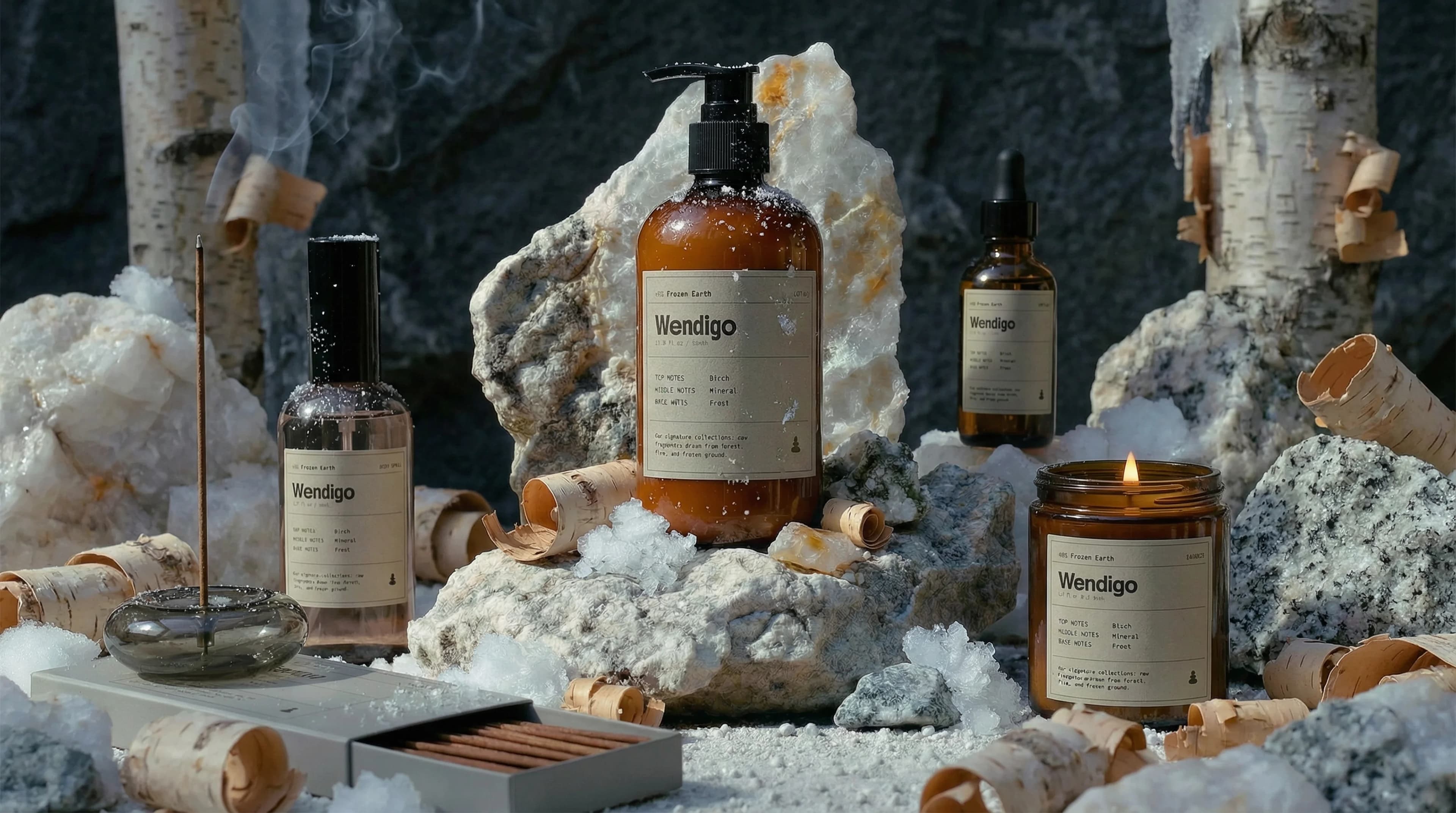
Most candle brands publish ingredient names. Few publish ingredient origins. This is the full sourcing map for a Wendigo candle, including the gaps we haven't closed yet.
Coconut wax
Cocos nucifera, hydrogenated. Sourced from a single supplier in Quezon Province, Philippines. The supplier processes coconuts from farms within a 50km radius of their facility.
What we've verified: site visit to processing facility (2023). Audit reports covering 2021–2024 on file, covering labor practices, traceability documentation, and quality systems.
What we haven't verified: individual farm-level practices within the supply radius. The supplier aggregates from a network of approximately 200 smallholder farms. Farm-by-farm audits are not currently practical at our volume.
Shipping: Manila to Long Beach, California, by container ship. Trucked from Long Beach to Portland, Oregon.
Rapeseed wax
Brassica napus, hydrogenated. Non-GMO. Sourced from a supplier in northern France.
What we've verified: supplier holds EU non-GMO certification with annual third-party audits. The rapeseed is grown under EU agricultural standards, which prohibit several pesticides permitted in U.S. agriculture.
What we haven't verified: specific farms. Supplier aggregates from regional cooperatives.
Shipping: Le Havre to Newark, New Jersey, by container ship. Trucked from Newark to Portland.
Cherrywood wicks
Prunus serotina, FSC-certified. Sourced from a wick manufacturer in Oregon that works with managed cherry forests in the Pacific Northwest.
What we've verified: FSC certification number is on the wick supplier's website and verifiable through fsc.org. The chain of custody covers the path from forest to finished wick.
What we haven't verified: independent inspection of the managed forests. We rely on FSC's audit chain.
Shipping: direct from Oregon manufacturer to our Portland facility.
Fragrance oil base
Custom-blended by a fragrance house in Grasse, France. Each Wendigo scent is a unique composition. The fragrance house is IFRA-compliant and we hold phthalate-free declarations on file for every batch.
What we've verified: IFRA compliance certificate per batch, phthalate-free declaration per batch, signed quality agreement with the fragrance house.
What we haven't verified: individual sub-suppliers for the synthetic aroma molecules used in compositions. These are proprietary to the fragrance house under standard industry IP terms.
Essential oil components (publicly disclosed):
Haitian vetiver (Vetiveria zizanioides)
Atlas cedar (Cedrus atlantica) from Morocco
Sweet birch (Betula lenta) tar from the Northeast US
Cypress (Cupressus sempervirens) from southern France
Italian bergamot (Citrus bergamia)
Australian sandalwood (Santalum spicatum)
Iris (Iris pallida) from Italy
Pine (Pinus sylvestris) from Scotland
Labdanum (Cistus ladaniferus) from Spain
Shipping: Grasse to our facility by air freight (small volumes, frequent shipments).
Vessel
Soda-lime glass, manufactured in Lancaster, Ohio. Not recycled content.
Why not recycled: recycled glass introduces colour variability (greens and blues from container glass) and thermal-shock inconsistency we haven't been able to control for. The trade-off is increased upstream impact for the virgin glass; we accept this currently and continue evaluating.
Shipping: Lancaster to Portland by truck.
Wick base clip
Zinc, lead-free, manufactured in Pennsylvania. Sourced through our wick supplier.
Adhesive (wick-to-vessel)
Food-grade silicone, manufactured in Wisconsin.
Labels
Printed on uncoated recycled paper (100% post-consumer), printed in Portland with soy-based inks.
Box
Uncoated kraft cardboard, 100% recycled content, manufactured in Minnesota. No interior plastic, no foil stamping, no plastic wrap.
Final assembly
Our facility in Portland, Oregon. Hand-poured in small batches.
The aggregate picture
A 9 oz Wendigo candle has supply chain touchpoints in:
Philippines (coconut)
France (rapeseed, fragrance composition)
Multiple countries (essential oil components within the fragrance)
Pacific Northwest US (wick)
Ohio (vessel)
Pennsylvania (wick base clip)
Wisconsin (adhesive)
Minnesota (box)
Oregon (labels, final assembly)
This is more international than a fully domestic supply chain and less international than most premium beauty products. The coconut and the fragrance composition are the two most-international inputs and the two where we don't currently have a viable domestic alternative.
Where the sourcing is honest
We can name the supplier for every input above. We can produce certification documentation or audit summaries on request. We've visited the most consequential supply chain (coconut wax) in person.
Where the sourcing has gaps
Coconut farm-level traceability. In progress, targeted for 2026.
Independent forest inspection. We rely on FSC certification and haven't independently verified the managed forests.
Synthetic aroma molecule sub-suppliers. Held by the fragrance house under IP. We can disclose the IFRA category but not the molecule-level supply chain.
Glass recycled content. We've prioritized colour and thermal-shock consistency over recycled content. This is a tradeoff we continue to evaluate.
Why we publish this
Sourcing maps are common in coffee, chocolate, and wine. They're uncommon in fragrance. The argument against publishing is competitive — disclosing suppliers can lead to competitors poaching them. We accept that risk because the alternative is asking buyers to take our sourcing on faith, which is the same thing the rest of the category does.
A sourcing map with disclosed gaps is more useful than a sourcing claim with no map. The gaps tell you where the supply chain is hardest to audit. The disclosed sections tell you what we've already done the work on.
Updated quarterly. Last revision: Q3.
Updated quarterly. Last revision: Q3.
Wendigo & Co.