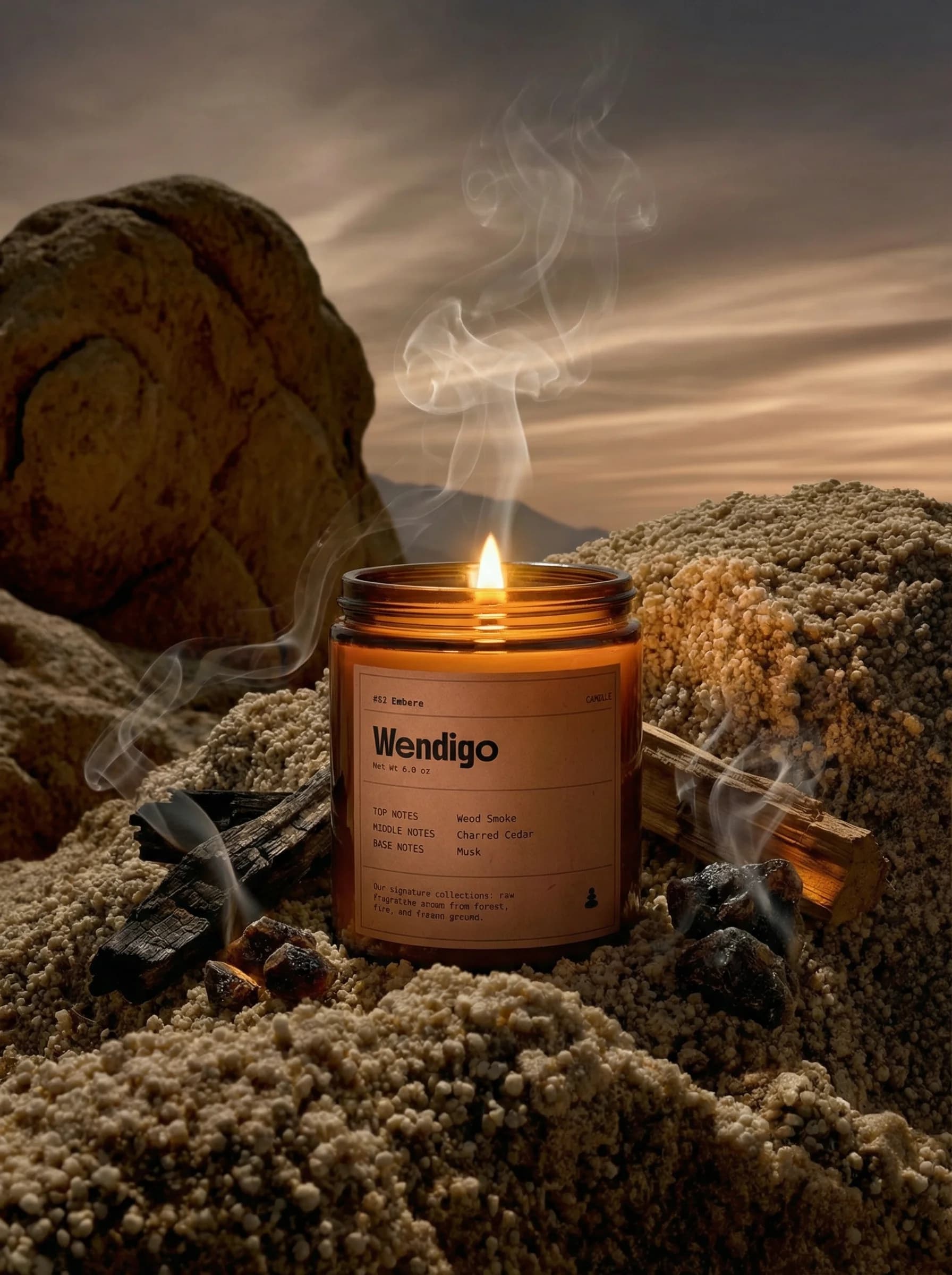
"Clean fragrance" is a marketing term. It's also, in some uses, a meaningful description. The difference is whether it refers to specific compound-level criteria or to a brand position. This is the compound-level version.
If you work in wellness or clean beauty, you've already seen the term applied loosely. The goal here isn't to litigate the language — it's to lay out the criteria that, if a brand meets them, would make the term meaningful.
Clean fragrance, defined operationally
A fragrance composition that:
Excludes phthalates. Specifically DEP, DEHP, DBP, BBP, DIDP, and DINP. DEP is the most commonly used as a fragrance solvent in the broader industry; the others are restricted in children's products but not in adult-targeted fragrance.
Excludes synthetic musks classified as persistent or bioaccumulative. Specifically the polycyclic musks galaxolide (HHCB) and tonalide (AHTN), and the nitro musks musk xylene and musk ketone. The polycyclic musks are not acutely toxic but bioaccumulate in aquatic systems and have been detected in human breast milk and adipose tissue. The nitro musks are largely phased out but appear occasionally in older or unregulated formulations.
Complies with IFRA standards. Currently 51st Amendment. IFRA compliance covers usage limits on individual aroma chemicals, allergen disclosure thresholds, and prohibitions on specific compounds with documented sensitization profiles.
Discloses the EU's 26-allergen list above the labeling threshold. Citronellol, linalool, limonene, geraniol, eugenol, citral, and others. Many of these are naturally occurring compounds in essential oils (limonene in citrus, linalool in lavender, etc.), so an "all-natural" fragrance is not automatically allergen-free. Disclosure above 0.001% in leave-on products, 0.01% in rinse-off, is required in the EU.
Excludes formaldehyde and formaldehyde releasers. DMDM hydantoin, quaternium-15, imidazolidinyl urea. These appear as preservatives in some formulations and slowly release formaldehyde over time. Not typically used in fragrance directly but relevant in fragrance-carrier products (lotions, sprays).
Excludes parabens used as fragrance solvents. Rare but possible. Methylparaben and propylparaben are more commonly seen as preservatives in carrier formulations than as fragrance solvents, but their occasional use in fragrance is part of why clean fragrance excludes them.
Why each criterion matters, briefly
Phthalates. Used as fragrance solvents to slow evaporation and increase persistence. Endocrine disruption evidence is strongest for DEHP, DBP, and BBP (banned in U.S. children's products since 2008). DEP is considered safer than those three but is still a phthalate, and the conservative position in clean fragrance is exclusion of all of them. Mechanism of concern: estrogenic and anti-androgenic activity at developmental life stages.
Polycyclic musks. Persistence and bioaccumulation. Not acutely toxic at consumer exposure levels but the long-term implications of body burden are not well characterized. The precautionary position is substitution with cleaner musks (musk T, ambrettolide, helvetolide), which are now standard in premium clean formulations.
IFRA compliance. This is the industry's self-regulatory framework. Not perfect — IFRA permits low-level use of some materials that the strictest clean-fragrance positions exclude — but it's the most credible baseline currently in widespread use. A brand that's not IFRA-compliant is operating below industry self-regulation.
Allergens. The 26-allergen list isn't a contamination list — it's a disclosure list. The compounds are permitted; they just have to be declared above threshold. A clean fragrance brand should be willing to tell you which of the 26 are present and at what concentration.
Formaldehyde releasers. Sensitization and carcinogenicity concerns for formaldehyde itself are well-documented. Releasers extend the exposure window. Exclusion is straightforward and not controversial.
What clean fragrance does not require
All-essential-oil composition. Many synthetic aroma molecules are safer than natural extracts. Synthetic musk T (a clean musk replacement) is preferred to natural ambrette in most modern clean formulations because the synthetic is more stable and produces less variability. Natural ≠ safer is the consistent finding across fragrance toxicology.
Zero allergens. Allergen disclosure is required; allergen exclusion is not. An "allergen-free" claim is almost always false at the compound level — limonene is present in trace amounts in many natural materials and is one of the 26.
Single-ingredient transparency at the molecule level. Most fragrance houses keep individual aroma molecules proprietary under standard industry IP terms. The IFRA system audits at the formulation level, and the brand-facing documentation is the IFRA compliance certificate and the phthalate-free declaration. Molecule-level transparency is achievable for essential oils (named by Latin binomial) but typically not for the synthetic fraction.
Where Wendigo sits against these criteria
Phthalates: excluded across all six classes. Declaration on file per batch.
Polycyclic and nitro musks: excluded. Synthetic musks used are limited to musk T and ambrettolide.
IFRA compliance: 51st Amendment, certificate per batch.
EU 26-allergen list: disclosed above threshold per scent on product pages.
Formaldehyde releasers: excluded. Lotion preservation uses phenoxyethanol alone.
Parabens: excluded across all formats.
The fragrance composition is disclosed by note family with Latin binomials for essential oil components. Synthetic aroma molecules beyond the named accords are listed by IFRA category (woody, floral, musk, etc.) rather than by individual molecule. This is the maximum disclosure our fragrance house permits under their IP terms. We're explicit about that limit.
The wider point
"Clean" without specifics is a positioning. "Clean" with the six criteria above is a description. Ask the brand which version they mean.
If they can't answer the question, the term is the first version. If they can answer the question with documentation, the term is the second.
The clean beauty category has matured enough that the documentation should be table stakes. The brands still using "clean" as positioning without backing it with compound-level criteria are operating on the era's residual goodwill. That goodwill is finite.
That goodwill is finite.
Wendigo & Co.